
Zebra
Somewhere in, NJ
Male, 62
I've officiated football for over 30 years, now in my 26th on the college level. I've worked NCAA playoffs at the Division II and III level. In addition, I've coached at the scholastic level and have been an educator for over 35 years. I have no interest whatsoever in being an NFL official! Ever!
While unusual, it's the right thing to do. It may be that the official, possibly getting to it late or the offense ran the play quickly, was in the process of counting when the play went off. Yes, the official should be counting "faster" but the idea is to get it right. He did. If the official thought he had 12, a less than perfect solution could be to stop play if he thinks he has 12, count, then flag it. If there are 11, play on.
Share Answer: 

You're asking questions of philosophy, something that isn't in the rule book. First, it depends who is calling the timeout, offense or defense. The defense often waits to the last second to call it in order to "ice" the kicker. But if the snap is in the process of going off, it is possible for the timeout to not be granted. You ask about the whistle blowing "very slightly" after the snap; that probably means it was asked for prior to the snap. When you see the snap go and the kick made as whistles are being blown, the timeout was granted prior to the snap - the kick will not count. Usually, for the offense the timeout is granted.
Share Answer: 
I believe all levels of football rules are pretty much in agreement on this. The NCAA rule book states: "Forward progress is a term indicating the end of advancement by the ball carrier or airborne pass receiver of either team and applies to the position of the ball when it becomes dead by rule."
The ball was held out and then the whistle blew. The ball was at a certain position - where Elliott had held it out - and that was where it was determined to have been when the runner's progress ended. It isn't much different from a ball carrier extending the ball over the goal line and then being pushed back; touchdown. Position of the ball.
Share Answer: 
Good question. In high school, no kick can be run out of the endzone. In college a grounded kick (one that has touched the ground) in the endzone, is also dead. If a receiver catches the ball in the endzone in college, it is still alive and can be run out.
Share Answer: 
Sushi Chef
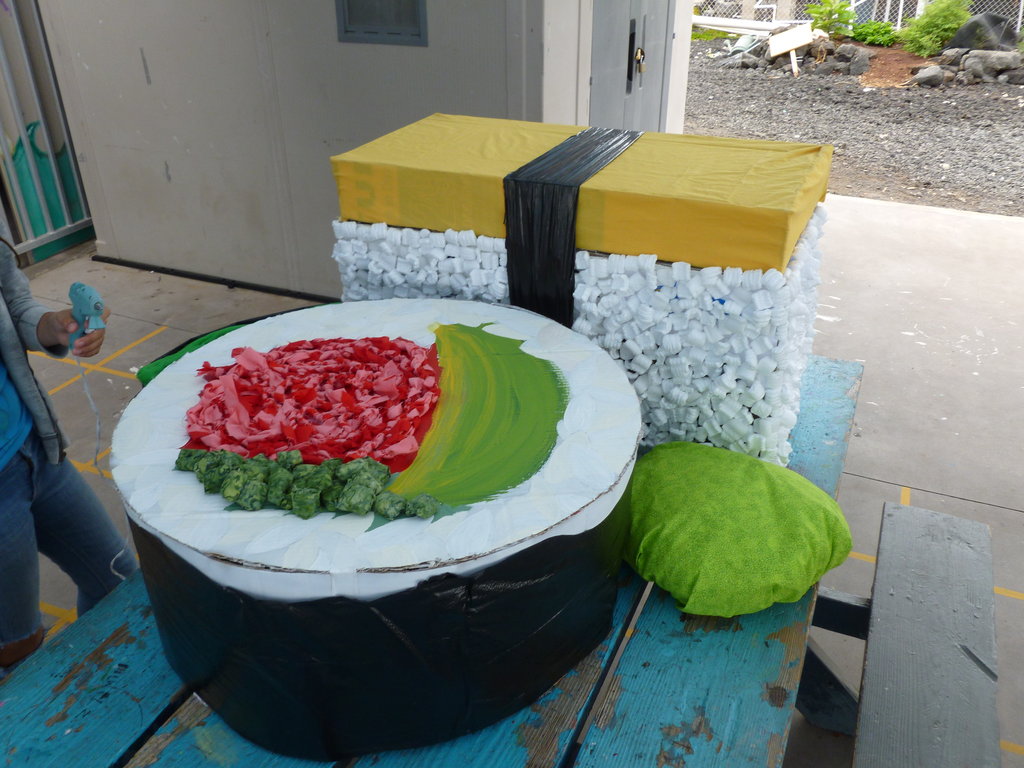 Is there a stigma against sushi restaurants that have non-Asian chefs?
Ice Sculptor
 What was the raciest sculpture you ever made?
Bar Mitzvah DJ
 What's the craziest thing you've seen at a bar mitzvah?
Uuuuh, that's strange. Why didn't they just give you the ball.
I think what you're describing is forward handing. That is a foul since the ball was handed (or "snatched") forward. It's like a hand off by the receivers on a punt or kickoff The ball usually is handed to the player running behind, not to the player in front to avoid the penalty.
Share Answer: 
Once the punter has kicked and recovers and goes to be involved in the play (going after/tackling a runner) he's a player and is no different than any other player. Same with a QB after an interception. If the QB goes to tackle and participates in the play, he's fair game. If he just stands there, then you can't hit him.
Share Answer: 
Hmmm, history question! Honestly not sure. I've been doing this for over 30 years....there were those who might have mistakenly called ug offsides but it was always. as far as I recall, illegal procedure. That's a fslse start.
Share Answer: 
-OR-
 Login with Facebook
 (max 20 characters - letters, numbers, and underscores only. Note that your username is private, and you have the option to choose an alias when asking questions or hosting a Q&A.)
(A valid e-mail address is required. Your e-mail will not be shared with anyone.)
(min 5 characters)
By checking this box, you acknowledge that you have read and agree to Jobstr.com’s Terms and Privacy Policy.
-OR-
Register with Facebook(Don't worry: you'll be able to choose an alias when asking questions or hosting a Q&A.)



 Browse Jobs
 Host a Q&A
 Search

 Submit Your Question
 Host a Q&A
 Last 7

