
LIsa Black
Cape Coral, FL
Female, 49


I spent the five happiest years of my life in a morgue. As a forensic scientist in the Cleveland coroner’s office I analyzed gunshot residue on hands and clothing, hairs, fibers, paint, glass, DNA, blood and many other forms of trace evidence, as well as crime scenes. Now I'm a certified latent print examiner and CSI for a police department in Florida. I also write a series of forensic suspense novels, turning the day job into fiction. My books have been translated into six languages.
I have no idea.
Share Answer: 

Please send me an email at lisa-black@live.com.
Share Answer: 
Not regularly, but I’ve caught many reruns over the years.
Share Answer: 
As far as I know it’s certainly possible to cut the entire ear off, but I would guess it would be difficult to do accidentally or in the heat of battle without causing other injuries to the face. But that’s entirely a guess on my part. I don’t know more than the basics about either Van Gogh or Gaughan or the incident. Sorry I can’t be more help!
Share Answer: 
Court Reporter
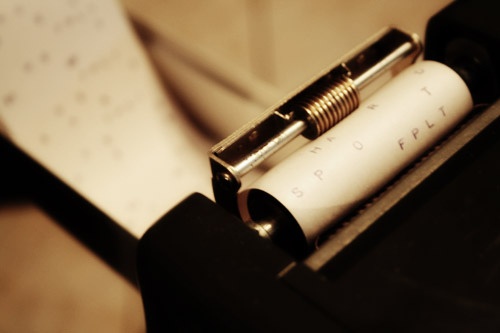 If your special keyboard lets you type 200+ words per minute, why doesn't everyone use them?
Lifeguard
 Did you ever have to perform CPR or mouth-to-mouth on a swimmer?
iPhone & iPad Technician
 Do you think tablets are just a fad?
I'm sorry but I also can't answer that question. You'd have to ask an anthropologist.
Share Answer: 
I'm so sorry for your loss. They most likely drew the blood right away, and tested it three days later. As far as I know that would not affect the results--bodily fluids are usually not tested immediately since the M.E. or coroner's office sends the samples to a different location for testing. Blood for alcohol testing is collected in special gray topped tubes for that particular purpose, designed to keep the results accurate. Again, I'm sorry for your loss.
Share Answer: 
Like any job it gets easier the more you are accustomed and practiced in what you’re doing. I have no idea what kind of IQ you need, and it depends on what you want to do. If you want to analyze DNA you may need a PhD in genetics. But to work crime scene you need only be conscientious, reliable, observant, and willing to learn. Best of luck!
Share Answer: 
-OR-
 Login with Facebook
 (max 20 characters - letters, numbers, and underscores only. Note that your username is private, and you have the option to choose an alias when asking questions or hosting a Q&A.)
(A valid e-mail address is required. Your e-mail will not be shared with anyone.)
(min 5 characters)
By checking this box, you acknowledge that you have read and agree to Jobstr.com’s Terms and Privacy Policy.
-OR-
Register with Facebook(Don't worry: you'll be able to choose an alias when asking questions or hosting a Q&A.)



 Browse Jobs
 Host a Q&A
 Search

 Submit Your Question
 Host a Q&A
 Last 7

