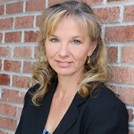
LIsa Black
Cape Coral, FL
Female, 49


I spent the five happiest years of my life in a morgue. As a forensic scientist in the Cleveland coroner’s office I analyzed gunshot residue on hands and clothing, hairs, fibers, paint, glass, DNA, blood and many other forms of trace evidence, as well as crime scenes. Now I'm a certified latent print examiner and CSI for a police department in Florida. I also write a series of forensic suspense novels, turning the day job into fiction. My books have been translated into six languages.
That depends entirely on your digital situation. How big is the database (how many fingerprints does it have to search through), are you searching both fingers and palms, how many servers or whatever can you devote to the task, and have the search parameters been narrowed down, say to only right hand fingers or only the left index. All those factors will affect it so that a search could take anywhere from a few seconds to a day .
Share Answer: 

No. There is no time stamp on DNA, so far as I know.
Share Answer: 
Vomit, horseradish, copper (as in pennies) and some cleaning compounds can also give a positive luminol reaction.Good luck on your project!
Share Answer: 
I'm sorry to hear about your brother. Unfortunately I have no idea how much blood there should be, you'd have to ask a pathologist, but from my experience I can guess it would depend on two things--what kind of surface was he on--concrete, tile, carpet, dirt? Also, how long the heart kept pumping after the injury. I have seen gunshot victims where they barely bled at all, and others were completely soaked practically head to toe. So there are a number of factors that will affect this.
Share Answer: 
Meter Maid
 What's the meanest thing anyone's ever said to you?
Hotel Travel Blog Active 2019
 Can hotels see what I look at when connected to their in-room wifi?
Nurse Practitioner
 Could a nurse practitioner do the job of a primary care physician?
I have not because I am not trained in facial construction. We did have a case in which we had a reconstruction done on a skull which helped identify the person. As for the casket, I don't see why not, depending upon the skill of the wax worker.
Share Answer: 
Sure, send me your email address. If you don't want to post it here you can email me through my website: www.lisa-black@live.com.
Share Answer: 
That's a good question but I'm afraid I have no idea since I've never worked anywhere except the U.S. I would guess that the scientific techniques would all be basically the same but the administrative aspects (paperwork, how reports are worded, what is done in which types of cases etc.) would vary.
Share Answer: 
-OR-
 Login with Facebook
 (max 20 characters - letters, numbers, and underscores only. Note that your username is private, and you have the option to choose an alias when asking questions or hosting a Q&A.)
(A valid e-mail address is required. Your e-mail will not be shared with anyone.)
(min 5 characters)
By checking this box, you acknowledge that you have read and agree to Jobstr.com’s Terms and Privacy Policy.
-OR-
Register with Facebook(Don't worry: you'll be able to choose an alias when asking questions or hosting a Q&A.)



 Browse Jobs
 Host a Q&A
 Search

 Submit Your Question
 Host a Q&A
 Last 7

