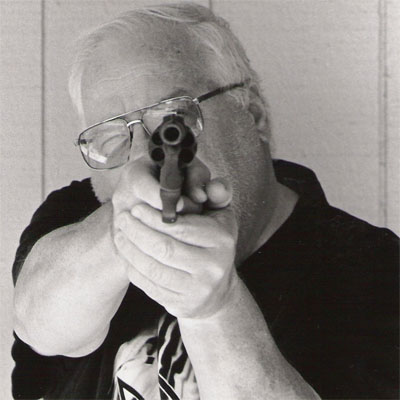
Bob Walsh
Stockton, CA
Male, 60

I worked for the California state system, starting as a Correctional Officer and retiring as a Lieutenant in 2005. I now write for the PacoVilla blog which is concerned with what could broadly be called The Correctional System.
Perhaps I am just cold. Also, perhaps I realize that the job of the DOC is to incarcerate persons committed to it by the courts for the period of time required by law. I have never personally sat on a criminal jury so I feel no level of personal responsibility at all. I think that when such things happen it is regrettable and that the system should take appropriate steps to ensure this happens as little as possible, preferably not at all. That being said if you worry about things like that you will soon be unable to do the job.
Share Answer: 

We are peace officers under a different section of the penal code than "street cops." Our authority is limited to the course of our employment, which is, generally speaking, persons and locations under control of the department. We could arrest a person who interfered with, say for instance, the transport or medical treatment of a prisoner off grounds.
Share Answer: 
I am not mentally deranged nor am I a politician-whore, so NO I do not.
Share Answer: 
I haven't seen the list and do not intend to activate the link. Sorry to be so unhelpful, but my anti-virus software doesn't like it.
Share Answer: 
Suicide Hotline Manager
 Has anyone killed themselves during a call?
Sr. Software Engineer
 Are those $12,000 "learn to program" bootcamps a rip-off?
Casting Director
 What do you look for when auditioning candidates for reality TV?
Since I have been retired for 15 years, probably nothing. Also, neither Hillary nor Chelsey would come there, it is a male institution. Bill would probably be in protective custody. So I would probably laugh at him a lot, if I was there, which I wouldn't be.
Share Answer: 
We have to take a class in that.
Share Answer: 
It has been a LONG time since I have worked in the system but..... Back in the day inmates on A status could spend a full monthly draw assuming they had the money on the books. The more of a screw-up you were, the less money you were allowed to spend. An inmate on C status could spend just enough to buy some things like tooth paste, deoderant, shaving cream, etc. Of course they COULD still spend in on fig newtons and soda. It was, and presumably still is, a flawed system. Like many privileges it gave staff a handle, something to take away if the inmate screwed up. A very modest carrot-stick approach.
Share Answer: 
-OR-
 Login with Facebook
 (max 20 characters - letters, numbers, and underscores only. Note that your username is private, and you have the option to choose an alias when asking questions or hosting a Q&A.)
(A valid e-mail address is required. Your e-mail will not be shared with anyone.)
(min 5 characters)
By checking this box, you acknowledge that you have read and agree to Jobstr.com’s Terms and Privacy Policy.
-OR-
Register with Facebook(Don't worry: you'll be able to choose an alias when asking questions or hosting a Q&A.)



 Browse Jobs
 Host a Q&A
 Search

 Submit Your Question
 Host a Q&A
 Last 7

